
Introduction
A damaged roof can turn a peaceful home into a stressful financial problem almost overnight. Knowing how to get insurance to cover roof replacement can make a major difference when a storm, hail, wind, falling tree, or another covered event leaves your roof badly damaged.
The important thing to understand is that homeowners insurance generally does not pay for every old or failing roof. Coverage usually depends on why the roof was damaged, what your policy covers, the roof’s condition, your deductible, and whether your policy pays actual cash value or replacement cost.
If you believe the damage resulted from a covered event, acting quickly and documenting everything can strengthen your claim. Here’s how to approach the process without making expensive mistakes.
Understand When Insurance May Pay for a Roof
Before filing a claim, understand what your policy actually protects. Homeowners policies commonly cover structural damage caused by covered perils such as wind, hail, fire, lightning, and falling objects. Routine deterioration and normal wear and tear generally aren’t covered.
This distinction is crucial. A roof that simply reached the end of its useful life is different from a relatively sound roof that was suddenly damaged by a severe storm. Insurance companies typically investigate the cause of loss rather than simply asking whether the roof needs replacement.
Check Your Policy Before Making Assumptions
Look for sections covering:
- Dwelling or structure coverage
- Wind and hail damage
- Roof-specific limitations
- Exclusions
- Deductibles
- Actual cash value (ACV)
- Replacement cost value (RCV)
- Special deductibles for wind or hail
Some policies may have different treatment for older roofs, including ACV payments rather than full replacement cost.

How to Get Insurance to Cover Roof Replacement After Storm Damage
The strongest claims usually begin with good documentation. Don’t immediately tear off damaged shingles or authorize a complete replacement before giving your insurer a reasonable opportunity to inspect the loss.
Take clear photographs and videos from multiple angles. Photograph missing shingles, lifted or cracked shingles, damaged flashing, dents from hail, exposed decking, fallen branches, gutters, siding, windows, and any interior water damage.
The National Association of Insurance Commissioners recommends documenting losses, photographing damage, preserving damaged items when practical, and notifying the insurer or agent. Temporary repairs may also be appropriate to prevent additional damage.
eep Evidence of the Roof’s Condition
If you have older photographs showing that the roof was in good condition before the storm, save them. Maintenance records, inspection reports, invoices, previous roofing work, and receipts can also help establish the roof’s history.
This matters because an insurer may argue that damage resulted from age or deterioration rather than the reported event. Your goal isn’t to exaggerate damage; it’s to provide a clear, accurate record of what happened.
Get a Professional Roof Inspection
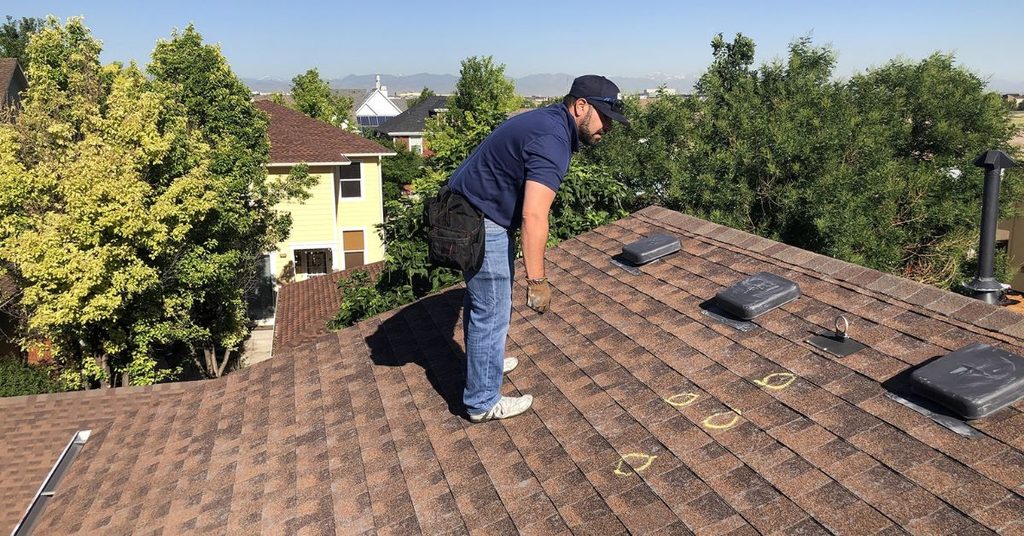
A qualified roofing professional can identify damage that isn’t obvious from the ground. Ask the roofer to provide a detailed inspection report with photographs and a written estimate.
However, don’t ask a contractor to manufacture evidence or claim that old damage came from a recent storm. Insurance claims should be based on factual observations. False or exaggerated claims can create serious problems.
A good inspection should distinguish between:
- Storm-related damage
- Normal aging
- Poor installation
- Previous repairs
- Maintenance issues
- Damage that may require immediate temporary protection
File the Insurance Claim Promptly
Once you’ve documented the damage, contact your insurance company or agent and report the loss. Provide the date of the storm or event, what you observed, photographs, and any available inspection information.
Your insurer may assign an adjuster to inspect the property. The adjuster’s job is to investigate the cause and extent of damage and determine how the policy applies.
When learning how to get insurance to cover roof replacement, remember that the claim should focus on the covered cause of damage, not simply the fact that you want a new roof.
Be Present During the Adjuster’s Inspection
If possible, be at home when the adjuster arrives. You can point out areas that may otherwise be overlooked, including attic leaks, interior stains, damaged gutters, and evidence of water intrusion.
You can also provide your photographs and contractor documentation. Keep the conversation factual and avoid guessing about things you don’t know.
Understand ACV, RCV, and Your Deductible
One of the biggest sources of confusion in roof claims is the difference between actual cash value and replacement cost.
Actual Cash Value (ACV) considers depreciation based on age and wear. Replacement Cost Value (RCV) generally covers the cost to repair or replace damaged property with materials of like kind and quality, without deducting depreciation, subject to policy terms and limits.
For example, if a replacement roof costs $18,000 and your policy applies $6,000 in depreciation with a $2,000 deductible, the initial payment could be substantially lower than $18,000. The exact settlement depends on your policy and claim circumstances.
Some replacement-cost policies initially pay ACV and release recoverable depreciation after qualifying repairs are completed. Read your policy carefully and ask the insurer what documentation is required.
What If the Insurance Company Denies the Claim?
A denial isn’t necessarily the end of the process. First, ask for the denial in writing and identify the specific policy language the insurer relied upon.
Review the explanation carefully. The disagreement may involve:
- Cause of damage
- Extent of damage
- Roof age
- Policy exclusions
- Depreciation
- Deductible
- Coverage limitations
- Whether damage existed before the reported event
If you believe the decision is incorrect, provide additional evidence such as photographs, inspection reports, invoices, weather documentation, or another professional opinion.
Depending on your policy and local regulations, you may also have options such as an internal appeal, appraisal, mediation, or contacting your state insurance department. The appropriate option varies by jurisdiction and policy language.
Common Mistakes That Can Hurt a Roof Claim
Knowing how to get insurance to cover roof replacement also means knowing what not to do.
Avoid these common mistakes:
- Waiting too long to report damage. Policies may impose notice requirements.
- Replacing the entire roof before inspection. This can make it harder to establish the original condition.
- Ignoring temporary leaks. Failure to protect the property from further damage can create complications.
- Accepting the first estimate without reviewing it. Check what work and materials are included.
- Assuming every roof problem is covered. Wear and tear is commonly excluded.
- Hiring someone who guarantees insurance approval. No contractor can legitimately guarantee that an insurer will cover a claim.
- Failing to understand depreciation. ACV and RCV can produce very different payouts.
When a Roofing Contractor Can Help
A reputable roofing contractor can be valuable during the inspection and estimating process. They can identify visible and hidden damage, prepare a detailed scope of work, and explain the practical cost of repairs.
However, the contractor does not decide whether your policy provides coverage. That decision belongs to the insurer according to the insurance contract.
The best approach is to keep the roles clear: the contractor documents and estimates the physical work, while the insurer determines coverage.
How to Get Insurance to Cover Roof Replacement Without Unnecessary Delays
Preparation can make the process much smoother. Keep your policy documents accessible, maintain records of roof repairs, photograph the roof periodically, and save invoices for professional inspections or maintenance.
After a storm, document damage before making non-emergency repairs. Keep copies of every email, estimate, photograph, report, and claim-related conversation.
The Insurance Information Institute notes that roof age and condition can significantly influence how insurers handle roof coverage, while NAIC guidance emphasizes understanding the difference between ACV and replacement-cost coverage.
Frequently Asked Questions
Does homeowners insurance always cover roof replacement?
No. Coverage generally depends on the cause of damage and the terms of your policy. Covered events such as certain wind or hail damage may qualify, while normal wear and tear usually does not.
How do I prove that a storm damaged my roof?
Use dated photographs and videos, professional inspection reports, repair records, weather information, and evidence showing the roof’s condition before the event.
Will insurance replace an old roof?
It depends on the policy. Older roofs may have special limitations or may be settled using ACV rather than replacement cost.
What is the difference between ACV and RCV?
ACV subtracts depreciation from the covered repair or replacement cost. RCV generally covers replacement with materials of like kind and quality without depreciation, subject to the policy’s terms and limits.
Should I get a roofer before filing a claim?
A professional inspection can help you understand the damage and prepare documentation, but avoid unnecessary permanent repairs before the insurer has an opportunity to inspect.
Can I file a claim if my roof is leaking?
You can report the loss, but whether the repair is covered depends on the cause. A leak caused by a covered event may be treated differently from one caused by long-term deterioration.
What happens if my insurance estimate is too low?
Ask for a detailed explanation and compare the insurer’s scope with your contractor’s documented estimate. Provide evidence for any disputed items and follow your policy’s dispute or appraisal procedures where applicable.
Can a contractor guarantee insurance approval?
No reputable contractor can guarantee coverage. The insurer determines whether the loss is covered under the policy.
Conclusion
Learning how to get insurance to cover roof replacement is less about finding a shortcut and more about building a well-documented, legitimate claim. Start by understanding your policy, establish what caused the damage, photograph everything, protect the home from further loss, and report the claim promptly.
Most importantly, don’t assume that needing a new roof automatically means insurance will pay for it. Coverage depends on the policy, the cause of damage, the roof’s condition, applicable deductibles, and the method used to calculate the settlement. With accurate documentation and professional guidance, you can approach the claims process with much greater confidence.